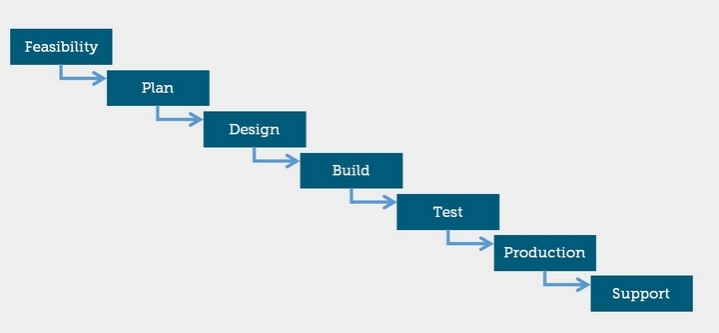
The waterfall model is one in which every period of an item’s life cycle happens in succession, with the goal that advance streams consistently downwards through these stages like a waterfall.
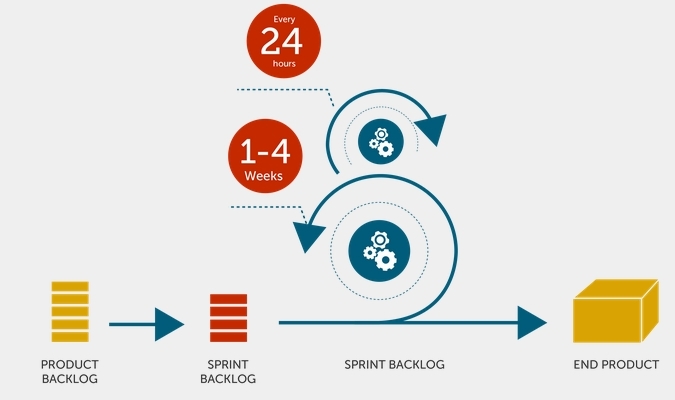
An Agile programming advancement technique—for example, Scrum—is one that shuns a direct, successive methodology for an incremental and iterative one.
Core Principles of Agile Project Management:
- Customer Satisfaction through Continuous Delivery: Agile focuses on delivering working software early and often. The key to success here is reducing the time between gathering requirements and obtaining customer feedback. This keeps the product aligned with the customer’s needs.
- Welcoming Changing Requirements: Unlike traditional models, Agile embraces change even late in the development process. Adjustments are made as necessary to provide a competitive advantage for the customer.
- Frequent Delivery of Working Software: Agile aims for frequent releases, ranging from weeks to months. This is a shift from documentation-heavy processes to a focus on delivering functional software.
- Daily Collaboration Between Business People and Developers: Regular interaction between stakeholders and developers ensures better communication, fostering a shared understanding of the project requirements.
- Face-to-Face Communication: Agile promotes direct conversations as the most efficient form of communication, reducing the time between questions and answers.
- Working Software as the Primary Measure of Progress: Delivering functional software is the ultimate benchmark for success in Agile projects.
- Sustainable Development: Agile promotes maintaining a constant pace to avoid burnout, ensuring long-term productivity.
- Attention to Technical Excellence and Good Design: Agile encourages continuous improvements in code quality, preventing technical debt from accumulating.
- Simplicity: Agile emphasizes keeping things simple by focusing on the essential tasks, avoiding unnecessary work.
- Self-Organizing Teams: Agile teams are empowered to make their own decisions, promoting autonomy and a proactive approach to problem-solving.
- Continuous Reflection and Adjustment: Agile teams regularly review their performance and make adjustments to improve efficiency.
Agile vs. Waterfall: Comparing Project Management Methods
- Pros of Waterfall Method:
- Clearer documentation and planning.
- Suitable for projects with well-defined requirements.
- Easier to manage for teams less familiar with Agile.
- Cons of the Waterfall Method:
- Difficult to accommodate changing requirements.
- Long lead times before producing a working product.
- Risk of major issues being discovered late in the process.
- Pros of Agile Method:
- Faster delivery of working software.
- Flexibility to accommodate changing requirements.
- Continuous collaboration between developers and stakeholders.
- Cons of Agile Method:
- It requires more user involvement throughout.
- Harder to predict the final outcome at the beginning.
- Can lead to scope creep if not managed carefully.
Advantages of Agile Project Management
- Better Product Quality: Agile promotes continuous attention to quality through practices like automated testing, daily integration, and the use of the “definition of done.”
- Higher Team Morale: Self-organizing teams promote creativity, innovation, and expertise, while Scrum Masters shield teams from distractions.
- Increased Collaboration and Ownership: Close collaboration between team members, stakeholders, and scrum masters ensures alignment and rapid progress.
- More Relevant Metrics: Agile teams continuously refine estimates, making predictions more accurate as the project progresses.
- Improved Performance Visibility: Frequent meetings and visible progress charts provide clarity on the project’s status.
- Increased Project Control: Agile practices offer opportunities to adjust plans frequently, ensuring teams stay aligned with objectives.
- Improved Project Predictability: Consistent sprint lengths and team velocity help in predicting timelines and budgets.
- Reduced Risk: Frequent iterations allow teams to fail fast or succeed early, with continuous feedback ensuring the project remains on track.
Disadvantages of Agile Project Management
- Demanding User Involvement: Agile requires active participation from users throughout the project, which can be time-consuming.
- Potential for Scope Creep: Agile’s flexibility can lead to ongoing changes, making it difficult to control scope and manage costs.
- Less Predictable Outcomes: Agile’s evolving nature can make it harder to define the final product early in the project.
- Increased Cost of Continuous Testing: Agile’s focus on constant testing requires testers to be involved throughout the project, which can raise costs.
- User acceptance testing (UAT) can be overwhelming. Continuous UAT may require users to test and sign off on features frequently.
- Developer Fatigue: Agile’s fast-paced and iterative approach can be mentally tiring, so finding a sustainable rhythm is crucial.
Scrum Overview: Scrum is an Agile framework designed for tackling complex work through iterative processes. A product owner prioritizes the work backlog, and the development team selects items to work on during short, time-boxed sprints (typically 2-4 weeks). Daily stand-up meetings help the team track progress, while a Scrum Master ensures the team stays on course. At the end of each sprint, the team delivers potentially shippable product increments, which are reviewed with stakeholders.
Limitations of Agile Software Management
- Distributed Teams: Agile’s emphasis on face-to-face communication may not suit teams that are geographically dispersed.
- Limited Support for Subcontracting: Agile processes are less suited to managing subcontractors who require detailed plans and milestones.
- Reusable Artifacts: Agile’s focus on rapid development can limit efforts to build reusable components, which need rigorous quality control.
- Large Teams: Agile’s focus on small, self-organizing teams can be challenging to scale to larger, more complex projects.
- Safety-Critical Software: Agile may not be ideal for developing software where failure could result in significant harm.
- Complex Architectures: Agile may struggle with large, complex systems that require rigid architectural decisions.
Challenges of Agile Project Management
- Methodologies and forms can impede productivity if not managed carefully.
- Effective communication with stakeholders and business owners is crucial but can be difficult.
- Balancing changing requirements with minimizing wasted effort is a common challenge in Agile projects.
Conclusion: Agile methods offer flexibility, quality, and improved collaboration, making them adaptable to customer needs. The iterative nature of Agile, especially with frameworks like Scrum, drives higher motivation, productivity, and overall success for project teams. However, the demands on user involvement, potential for scope creep, and difficulties in scaling Agile processes remain notable challenges. Despite these limitations, Agile is a highly effective approach to managing complex and evolving projects.
References
- http://manifesto.co.uk/agile-vs-waterfall-comparing-project-management-methodologies
- http://leankit.com/agile/agile-project-management-challenges
- http://www.allaboutagile.com/disadvantages-of-agile-development
- http://www.dummies.com/how-to/content/ten-benefits-of-agile-project-management.html
- http://blog.hubspot.com/agency/basic-principles-agile-project-management
Features of installing double glazed windows in Melbournenew triple glazed windows
Lineage 2 servers with immersive atmosphere of the world
L2 private servers
What’s up everyone, it’s my first pay a visit
at this site, and post is really fruitful in favor of me, keep upp posting these
content.
What’s up everyone, it’s my first pay a visit at this site, and poet is really fruitful in favor of me, keep up
posting these content.
Discover the latest inventions making waves in the tech world, incredible new technologies you need to know about.